

 Facebook
 Вход
Вход
 21
21


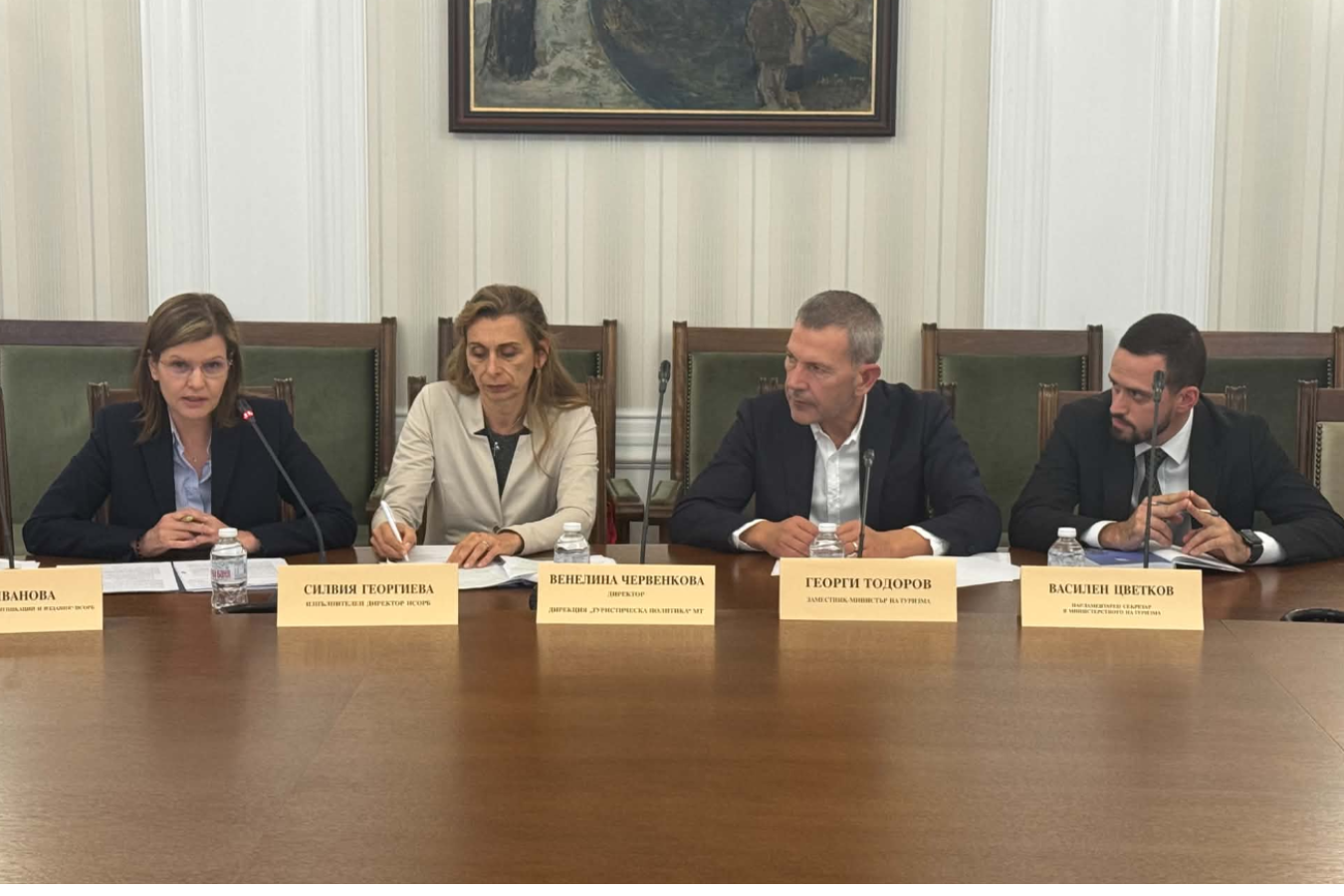
The parliamentary Tourism Committee did not endorse the proposal to abolish the annual tourist tax declaration. The decision was taken at the Committee’s meeting on 30 September, attended by NAMRB Executive Director Silvia Georgieva.
The Committee considered at first reading a bill amending and supplementing the Local Taxes and Fees Act, proposing the abolition of the declaration required under Article 61r(5). The bill’s sponsors argue that it duplicates information accommodation establishments already enter into the Unified Tourist Information System (ESTI), creating an unnecessary administrative burden.
NAMRB did not support the bill in its proposed form. Addressing members of Parliament, Silvia Georgieva stressed that the declaration is more than a resubmission of data: it serves an independent verification function. It enables municipal revenue authorities to compare the taxpayer’s annual declaration with information in ESTI, payments made and other available data.
“Abolishing the declaration would be justified only once ESTI provides an equivalent or higher level of data reliability and verifiability. This condition has not yet been met,” NAMRB’s Executive Director said.
Silvia Georgieva pointed out that information in ESTI is entered by accommodation operators themselves and is not validated by officials, as is the case with data exchanged between municipalities and other state systems. Municipalities also report technical difficulties, a lack of automated data exchange and insufficient safeguards for tracking subsequent changes to overnight-stay records.
NAMRB called for the declaration to be retained until several key conditions are met: guaranteeing the integrity and traceability of information in ESTI; establishing rules for oversight of corrections; introducing automated data exchange between the system, the Ministry of Finance, the National Revenue Agency and municipalities; establishing a procedure for handling technical outages; and securing the necessary funding for system upgrades, training and maintenance.
“Abolishing the declaration should be the final stage of the reform, not the first,” Silvia Georgieva stated. As a possible way to reduce the administrative burden, NAMRB proposes that ESTI generate a pre-filled electronic declaration, which the taxpayer could confirm or correct and submit electronically.
The Ministry of Finance and the Ministry of Tourism also expressed reservations about the bill. The Ministry of Finance’s opinion states that abolishing the declaration would deprive municipalities of an independent source for verifying and cross-checking data, without providing a mechanism for corrections or for the authorities to establish the actual tax liability. The Ministry of Tourism described the proposal as sound in principle but premature, pending completion of the planned changes to ESTI and the wider reform of the sector.
The discussion affirmed the need to reduce the administrative burden on tourism businesses. However, Committee members agreed that this must not come at the expense of oversight and municipal budget revenues.
The bill received two votes in favour, no votes against and 11 abstentions, and therefore did not secure the Tourism Committee’s support.

png.png "За еврото")
png.png "КАМПАНИИ ПРОЕКТ УСПЕХ")


